
[ad_1]
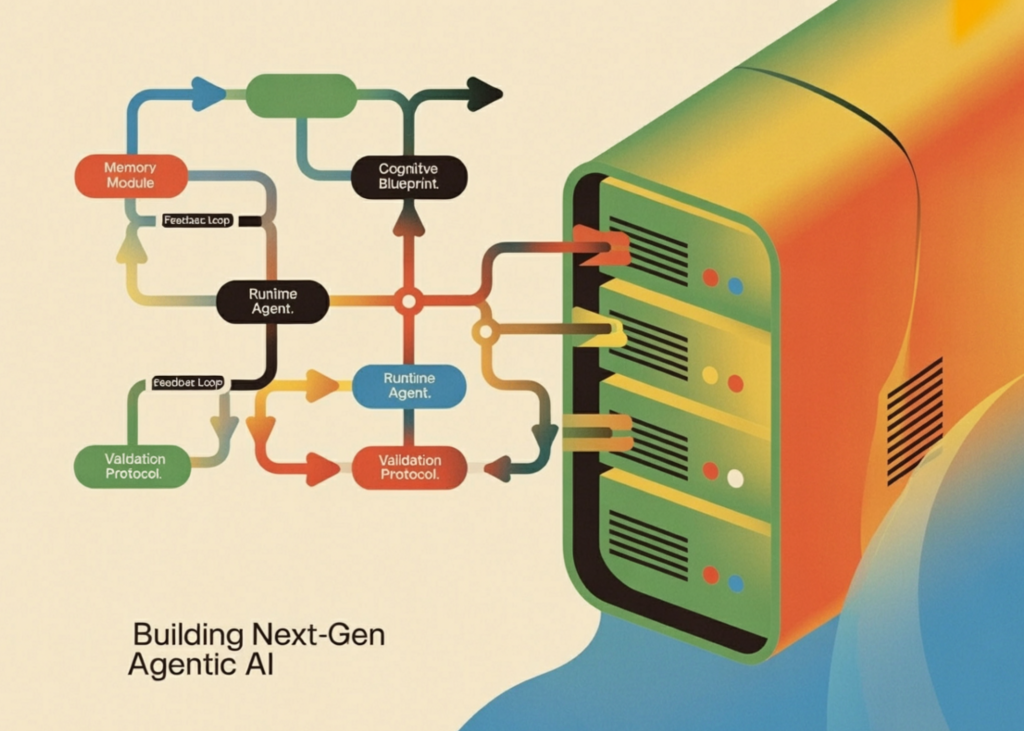
In diesem Tutorial erstellen wir ein vollständiges Framework für kognitive Blaupausen und Laufzeitagenten. Wir definieren strukturierte Blaupausen für Identität, Ziele, Planung, Gedächtnis, Validierung und Werkzeugzugriff und verwenden sie, um Agenten zu erstellen, die nicht nur reagieren, sondern ihre Ergebnisse auch planen, ausführen, validieren und systematisch verbessern. Im Rahmen des Tutorials zeigen wir, wie dieselbe Laufzeit-Engine durch Blueprint-Portabilität mehrere Agentenpersönlichkeiten und -verhalten unterstützen kann, wodurch das Gesamtdesign modular, erweiterbar und praktisch für fortgeschrittene Agenten-KI-Experimente wird.
import json, yaml, time, math, textwrap, datetime, getpass, os
from typing import Any, Callable, Dict, Record, Elective
from dataclasses import dataclass, area
from enum import Enum


from openai import OpenAI
from pydantic import BaseModel
from wealthy.console import Console
from wealthy.panel import Panel
from wealthy.desk import Desk
from wealthy.tree import Tree


attempt:
   from google.colab import userdata
   OPENAI_API_KEY = userdata.get('OPENAI_API_KEY')
besides Exception:
   OPENAI_API_KEY = getpass.getpass("🔑 Enter your OpenAI API key: ")


os.environ("OPENAI_API_KEY") = OPENAI_API_KEY
consumer = OpenAI(api_key=OPENAI_API_KEY)
console = Console()


class PlanningStrategy(str, Enum):
   SEQUENTIAL   = "sequential"
   HIERARCHICAL = "hierarchical"
   REACTIVE     = "reactive"


class MemoryType(str, Enum):
   SHORT_TERM = "short_term"
   EPISODIC   = "episodic"
   PERSISTENT = "persistent"


class BlueprintIdentity(BaseModel):
   identify: str
   model: str = "1.0.0"
   description: str
   writer: str = "unknown"


class BlueprintMemory(BaseModel):
   sort: MemoryType = MemoryType.SHORT_TERM
   window_size: int = 10
   summarize_after: int = 20


class BlueprintPlanning(BaseModel):
   technique: PlanningStrategy = PlanningStrategy.SEQUENTIAL
   max_steps: int = 8
   max_retries: int = 2
   think_before_acting: bool = True


class BlueprintValidation(BaseModel):
   require_reasoning: bool = True
   min_response_length: int = 10
   forbidden_phrases: Record(str) = ()


class CognitiveBlueprint(BaseModel):
   identification: BlueprintIdentity
   objectives: Record(str)
   constraints: Record(str) = ()
   instruments: Record(str) = ()
   reminiscence: BlueprintMemory = BlueprintMemory()
   planning: BlueprintPlanning = BlueprintPlanning()
   validation: BlueprintValidation = BlueprintValidation()
   system_prompt_extra: str = ""


def load_blueprint_from_yaml(yaml_str: str) -> CognitiveBlueprint:
   return CognitiveBlueprint(**yaml.safe_load(yaml_str))


RESEARCH_AGENT_YAML = """
identification:
 identify: ResearchBot
 model: 1.2.0
 description: Solutions analysis questions utilizing calculation and reasoning
 writer: Auton Framework Demo
objectives:
 - Reply consumer questions precisely utilizing accessible instruments
 - Present step-by-step reasoning for all solutions
 - Cite the tactic used for every calculation
constraints:
 - By no means fabricate numbers or statistics
 - All the time validate mathematical outcomes earlier than reporting
 - Don't reply questions outdoors your software capabilities
instruments:
 - calculator
 - unit_converter
 - date_calculator
 - search_wikipedia_stub
reminiscence:
 sort: episodic
 window_size: 12
 summarize_after: 30
planning:
 technique: sequential
 max_steps: 6
 max_retries: 2
 think_before_acting: true
validation:
 require_reasoning: true
 min_response_length: 20
 forbidden_phrases:
   - "I do not know"
   - "I can not decide"
"""


DATA_ANALYST_YAML = """
identification:
 identify: DataAnalystBot
 model: 2.0.0
 description: Performs statistical evaluation and information summarization
 writer: Auton Framework Demo
objectives:
 - Compute descriptive statistics for given information
 - Determine developments and anomalies
 - Current findings clearly with numbers
constraints:
 - Solely work with numerical information
 - All the time report uncertainty when pattern measurement is small (< 5 objects)
instruments:
 - calculator
 - statistics_engine
 - list_sorter
reminiscence:
 sort: short_term
 window_size: 6
planning:
 technique: hierarchical
 max_steps: 10
 max_retries: 3
 think_before_acting: true
validation:
 require_reasoning: true
 min_response_length: 30
 forbidden_phrases: ()
"""
Wir richten die Kernumgebung ein und definieren den kognitiven Bauplan, der das Denken und Verhalten eines Agenten strukturiert. Wir erstellen stark typisierte Modelle für Identität, Speicherkonfiguration, Planungsstrategie und Validierungsregeln mithilfe von Pydantic und Enumerationen. Wir definieren außerdem zwei YAML-basierte Blaupausen, die es uns ermöglichen, verschiedene Agentenpersönlichkeiten und -funktionen zu konfigurieren, ohne das zugrunde liegende Laufzeitsystem zu ändern.
@dataclass
class ToolSpec:
   identify: str
   description: str
   parameters: Dict(str, str)
   perform: Callable
   returns: str


class ToolRegistry:
   def __init__(self):
       self._tools: Dict(str, ToolSpec) = {}


   def register(self, identify: str, description: str,
                parameters: Dict(str, str), returns: str):
       def decorator(fn: Callable) -> Callable:
           self._tools(identify) = ToolSpec(identify, description, parameters, fn, returns)
           return fn
       return decorator


   def get(self, identify: str) -> Elective(ToolSpec):
       return self._tools.get(identify)


   def name(self, identify: str, **kwargs) -> Any:
       spec = self._tools.get(identify)
       if not spec:
           increase ValueError(f"Instrument '{identify}' not present in registry")
       return spec.perform(**kwargs)


   def get_tool_descriptions(self, allowed: Record(str)) -> str:
       strains = ()
       for identify in allowed:
           spec = self._tools.get(identify)
           if spec:
               params = ", ".be a part of(f"{ok}: {v}" for ok, v in spec.parameters.objects())
               strains.append(
                   f"• {spec.identify}({params})n"
                   f"  → {spec.description}n"
                   f"  Returns: {spec.returns}"
               )
       return "n".be a part of(strains)


   def list_tools(self) -> Record(str):
       return checklist(self._tools.keys())


registry = ToolRegistry()


@registry.register(
   identify="calculator",
   description="Evaluates a secure mathematical expression",
   parameters={"expression": "A math expression string, e.g. '2 ** 10 + 5 * 3'"},
   returns="Numeric end result as float"
)
def calculator(expression: str) -> str:
   attempt:
       allowed = {ok: v for ok, v in math.__dict__.objects() if not ok.startswith("_")}
       allowed.replace({"abs": abs, "spherical": spherical, "pow": pow})
       return str(eval(expression, {"__builtins__": {}}, allowed))
   besides Exception as e:
       return f"Error: {e}"


@registry.register(
   identify="unit_converter",
   description="Converts between frequent models of measurement",
   parameters={
       "worth": "Numeric worth to transform",
       "from_unit": "Supply unit (km, miles, kg, lbs, celsius, fahrenheit, liters, gallons, meters, ft)",
       "to_unit": "Goal unit"
   },
   returns="Transformed worth as string with models"
)
def unit_converter(worth: float, from_unit: str, to_unit: str) -> str:
   conversions = {
       ("km", "miles"): lambda x: x * 0.621371,
       ("miles", "km"): lambda x: x * 1.60934,
       ("kg", "lbs"):   lambda x: x * 2.20462,
       ("lbs", "kg"):   lambda x: x / 2.20462,
       ("celsius", "fahrenheit"): lambda x: x * 9/5 + 32,
       ("fahrenheit", "celsius"): lambda x: (x - 32) * 5/9,
       ("liters", "gallons"): lambda x: x * 0.264172,
       ("gallons", "liters"): lambda x: x * 3.78541,
       ("meters", "ft"): lambda x: x * 3.28084,
       ("ft", "meters"): lambda x: x / 3.28084,
   }
   key = (from_unit.decrease(), to_unit.decrease())
   if key in conversions:
       return f"{conversions(key)(float(worth)):.4f} {to_unit}"
   return f"Conversion from {from_unit} to {to_unit} not supported"


@registry.register(
   identify="date_calculator",
   description="Calculates days between two dates, or provides/subtracts days from a date",
   parameters={
       "operation": "'days_between' or 'add_days'",
       "date1": "Date string in YYYY-MM-DD format",
       "date2": "Second date for days_between (YYYY-MM-DD), or variety of days for add_days"
   },
   returns="Outcome as string"
)
def date_calculator(operation: str, date1: str, date2: str) -> str:
   attempt:
       d1 = datetime.datetime.strptime(date1, "%Y-%m-%d")
       if operation == "days_between":
           d2 = datetime.datetime.strptime(date2, "%Y-%m-%d")
           return f"{abs((d2 - d1).days)} days between {date1} and {date2}"
       elif operation == "add_days":
           end result = d1 + datetime.timedelta(days=int(date2))
           return f"{end result.strftime('%Y-%m-%d')} (added {date2} days to {date1})"
       return f"Unknown operation: {operation}"
   besides Exception as e:
       return f"Error: {e}"


@registry.register(
   identify="search_wikipedia_stub",
   description="Returns a stub abstract for well-known subjects (demo — no dwell web)",
   parameters={"subject": "Subject to lookup"},
   returns="Brief textual content abstract"
)
def search_wikipedia_stub(subject: str) -> str:
   stubs = {
       "openai": "OpenAI is an AI analysis firm based in 2015. It created GPT-4 and the ChatGPT product.",
   }
   for key, val in stubs.objects():
       if key in subject.decrease():
           return val
   return f"No stub discovered for '{subject}'. In manufacturing, this may question Wikipedia's API."
Wir implementieren die Instrument-Registrierung, die es Agenten ermöglicht, externe Funktionen dynamisch zu erkennen und zu nutzen. Wir entwerfen ein strukturiertes System, in dem Werkzeuge mit Metadaten registriert werden, einschließlich Parametern, Beschreibungen und Rückgabewerten. Wir implementieren außerdem mehrere praktische Instruments, wie einen Taschenrechner, einen Einheitenumrechner, einen Datumsrechner und einen Wikipedia-Such-Stub, den die Agenten während der Ausführung aufrufen können.
@registry.register(
   identify="statistics_engine",
   description="Computes descriptive statistics on an inventory of numbers",
   parameters={"numbers": "Comma-separated checklist of numbers, e.g. '4,8,15,16,23,42'"},
   returns="JSON with imply, median, std_dev, min, max, rely"
)
def statistics_engine(numbers: str) -> str:
   attempt:
       nums = (float(x.strip()) for x in numbers.cut up(","))
       n = len(nums)
       imply = sum(nums) / n
       sorted_nums = sorted(nums)
       mid = n // 2
       median = sorted_nums(mid) if n % 2 else (sorted_nums(mid-1) + sorted_nums(mid)) / 2
       std_dev = math.sqrt(sum((x - imply) ** 2 for x in nums) / n)
       return json.dumps({
           "rely": n, "imply": spherical(imply, 4), "median": spherical(median, 4),
           "std_dev": spherical(std_dev, 4), "min": min(nums),
           "max": max(nums), "vary": max(nums) - min(nums)
       }, indent=2)
   besides Exception as e:
       return f"Error: {e}"


@registry.register(
   identify="list_sorter",
   description="Types a comma-separated checklist of numbers",
   parameters={"numbers": "Comma-separated numbers", "order": "'asc' or 'desc'"},
   returns="Sorted comma-separated checklist"
)
def list_sorter(numbers: str, order: str = "asc") -> str:
   nums = (float(x.strip()) for x in numbers.cut up(","))
   nums.type(reverse=(order == "desc"))
   return ", ".be a part of(str(n) for n in nums)


@dataclass
class MemoryEntry:
   function: str
   content material: str
   timestamp: float = area(default_factory=time.time)
   metadata: Dict = area(default_factory=dict)


class MemoryManager:
   def __init__(self, config: BlueprintMemory, llm_client: OpenAI):
       self.config = config
       self.consumer = llm_client
       self._history: Record(MemoryEntry) = ()
       self._summary: str = ""


   def add(self, function: str, content material: str, metadata: Dict = None):
       self._history.append(MemoryEntry(function=function, content material=content material, metadata=metadata or {}))
       if (self.config.sort == MemoryType.EPISODIC and
               len(self._history) > self.config.summarize_after):
           self._compress_memory()


   def _compress_memory(self):
       to_compress = self._history(:-self.config.window_size)
       self._history = self._history(-self.config.window_size:)
       textual content = "n".be a part of(f"{e.function}: {e.content material(:200)}" for e in to_compress)
       attempt:
           resp = self.consumer.chat.completions.create(
               mannequin="gpt-4o-mini",
               messages=({"function": "consumer", "content material":
                   f"Summarize this dialog historical past in 3 sentences:n{textual content}"}),
               max_tokens=150
           )
           self._summary += " " + resp.decisions(0).message.content material.strip()
       besides Exception:
           self._summary += f" (compressed {len(to_compress)} messages)"


   def get_messages(self, system_prompt: str) -> Record(Dict):
       messages = ({"function": "system", "content material": system_prompt})
       if self._summary:
           messages.append({"function": "system",
               "content material": f"(Reminiscence Abstract): {self._summary.strip()}"})
       for entry in self._history(-self.config.window_size:):
           messages.append({
               "function": entry.function if entry.function != "software" else "assistant",
               "content material": entry.content material
           })
       return messages


   def clear(self):
       self._history = ()
       self._summary = ""


   @property
   def message_count(self) -> int:
       return len(self._history)
Wir erweitern das Instrument-Ökosystem und führen die Speicherverwaltungsschicht ein, die den Gesprächsverlauf speichert und bei Bedarf komprimiert. Wir implementieren statistische Instruments und Sortierprogramme, die es dem Datenanalyseagenten ermöglichen, strukturierte numerische Operationen durchzuführen. Gleichzeitig entwerfen wir ein Speichersystem, das Interaktionen verfolgt, lange Historien zusammenfasst und dem Sprachmodell kontextbezogene Nachrichten liefert.
@dataclass
class PlanStep:
   step_id: int
   description: str
   software: Elective(str)
   tool_args: Dict(str, Any)
   reasoning: str


@dataclass
class Plan:
   job: str
   steps: Record(PlanStep)
   technique: PlanningStrategy


class Planner:
   def __init__(self, blueprint: CognitiveBlueprint,
                registry: ToolRegistry, llm_client: OpenAI):
       self.blueprint = blueprint
       self.registry  = registry
       self.consumer    = llm_client


   def _build_planner_prompt(self) -> str:
       bp = self.blueprint
       return textwrap.dedent(f"""
           You might be {bp.identification.identify}, model {bp.identification.model}.
           {bp.identification.description}


           ## Your Objectives:
           {chr(10).be a part of(f'  - {g}' for g in bp.objectives)}


           ## Your Constraints:
           {chr(10).be a part of(f'  - {c}' for c in bp.constraints)}


           ## Accessible Instruments:
           {self.registry.get_tool_descriptions(bp.instruments)}


           ## Planning Technique: {bp.planning.technique}
           ## Max Steps: {bp.planning.max_steps}


           Given a consumer job, produce a JSON execution plan with this precise construction:
           {{
             "steps": (
               {{
                 "step_id": 1,
                 "description": "What this step does",
                 "software": "tool_name or null if no software wanted",
                 "tool_args": {{"arg1": "value1"}},
                 "reasoning": "Why this step is required"
               }}
             )
           }}


           Guidelines:
           - Solely use instruments listed above
           - Set software to null for pure reasoning steps
           - Maintain steps <= {bp.planning.max_steps}
           - Return ONLY legitimate JSON, no markdown fences
           {bp.system_prompt_extra}
       """).strip()


   def plan(self, job: str, reminiscence: MemoryManager) -> Plan:
       system_prompt = self._build_planner_prompt()
       messages = reminiscence.get_messages(system_prompt)
       messages.append({"function": "consumer", "content material":
           f"Create a plan to finish this job: {job}"})
       resp = self.consumer.chat.completions.create(
           mannequin="gpt-4o-mini", messages=messages,
           max_tokens=1200, temperature=0.2
       )
       uncooked = resp.decisions(0).message.content material.strip()
       uncooked = uncooked.change("```json", "").change("```", "").strip()
       information = json.hundreds(uncooked)
       steps = (
           PlanStep(
               step_id=s("step_id"), description=s("description"),
               software=s.get("software"), tool_args=s.get("tool_args", {}),
               reasoning=s.get("reasoning", "")
           )
           for s in information("steps")
       )
       return Plan(job=job, steps=steps, technique=self.blueprint.planning.technique)


@dataclass
class StepResult:
   step_id: int
   success: bool
   output: str
   tool_used: Elective(str)
   error: Elective(str) = None


@dataclass
class ExecutionTrace:
   plan: Plan
   outcomes: Record(StepResult)
   final_answer: str


class Executor:
   def __init__(self, blueprint: CognitiveBlueprint,
                registry: ToolRegistry, llm_client: OpenAI):
       self.blueprint = blueprint
       self.registry  = registry
       self.consumer    = llm_client
Wir implementieren das Planungssystem, das eine Benutzeraufgabe in einen strukturierten Ausführungsplan umwandelt, der aus mehreren Schritten besteht. Wir entwerfen einen Planer, der das Sprachmodell anweist, einen JSON-Plan zu erstellen, der Begründung, Werkzeugauswahl und Argumente für jeden Schritt enthält. Diese Planungsebene ermöglicht es dem Agenten, komplexe Probleme vor der Ausführung in kleinere ausführbare Aktionen zu unterteilen.
  def execute_plan(self, plan: Plan, reminiscence: MemoryManager,
                    verbose: bool = True) -> ExecutionTrace:
       outcomes: Record(StepResult) = ()
       if verbose:
           console.print(f"n(daring yellow)⚡ Executing:(/) {plan.job}")
           console.print(f"   Technique: {plan.technique} | Steps: {len(plan.steps)}")


       for step in plan.steps:
           if verbose:
               console.print(f"n  (cyan)Step {step.step_id}:(/) {step.description}")
           attempt:
               if step.software and step.software != "null":
                   if verbose:
                       console.print(f"   🔧 Instrument: (inexperienced){step.software}(/) | Args: {step.tool_args}")
                   output = self.registry.name(step.software, **step.tool_args)
                   end result = StepResult(step.step_id, True, str(output), step.software)
                   if verbose:
                       console.print(f"   ✅ Outcome: {output}")
               else:
                   context_text = "n".be a part of(
                       f"Step {r.step_id} end result: {r.output}" for r in outcomes)
                   immediate = (
                       f"Earlier outcomes:n{context_text}nn"
                       f"Now full this step: {step.description}n"
                       f"Reasoning trace: {step.reasoning}"
                   ) if context_text else (
                       f"Full this step: {step.description}n"
                       f"Reasoning trace: {step.reasoning}"
                   )
                   sys_prompt = (
                       f"You might be {self.blueprint.identification.identify}. "
                       f"{self.blueprint.identification.description}. "
                       f"Constraints: {'; '.be a part of(self.blueprint.constraints)}"
                   )
                   resp = self.consumer.chat.completions.create(
                       mannequin="gpt-4o-mini",
                       messages=(
                           {"function": "system", "content material": sys_prompt},
                           {"function": "consumer",   "content material": immediate}
                       ),
                       max_tokens=500, temperature=0.3
                   )
                   output = resp.decisions(0).message.content material.strip()
                   end result = StepResult(step.step_id, True, output, None)
                   if verbose:
                       preview = output(:120) + "..." if len(output) > 120 else output
                       console.print(f"   🤔 Reasoning: {preview}")
           besides Exception as e:
               end result = StepResult(step.step_id, False, "", step.software, str(e))
               if verbose:
                   console.print(f"   ❌ Error: {e}")
           outcomes.append(end result)


       final_answer = self._synthesize(plan, outcomes, reminiscence)
       return ExecutionTrace(plan=plan, outcomes=outcomes, final_answer=final_answer)


   def _synthesize(self, plan: Plan, outcomes: Record(StepResult),
                   reminiscence: MemoryManager) -> str:
       steps_summary = "n".be a part of(
           f"Step {r.step_id} ({'✅' if r.success else '❌'}): {r.output(:300)}"
           for r in outcomes
       )
       synthesis_prompt = (
           f"Authentic job: {plan.job}nn"
           f"Step outcomes:n{steps_summary}nn"
           f"Present a transparent, full last reply. Combine all step outcomes."
       )
       sys_prompt = (
           f"You might be {self.blueprint.identification.identify}. "
           + ("All the time present your reasoning. " if self.blueprint.validation.require_reasoning else "")
           + f"Objectives: {'; '.be a part of(self.blueprint.objectives)}"
       )
       messages = reminiscence.get_messages(sys_prompt)
       messages.append({"function": "consumer", "content material": synthesis_prompt})
       resp = self.consumer.chat.completions.create(
           mannequin="gpt-4o-mini", messages=messages,
           max_tokens=600, temperature=0.3
       )
       return resp.decisions(0).message.content material.strip()


@dataclass
class ValidationResult:
   handed: bool
   points: Record(str)
   rating: float


class Validator:
   def __init__(self, blueprint: CognitiveBlueprint, llm_client: OpenAI):
       self.blueprint = blueprint
       self.consumer    = llm_client


   def validate(self, reply: str, job: str,
                use_llm_check: bool = False) -> ValidationResult:
       points = ()
       v = self.blueprint.validation


       if len(reply) < v.min_response_length:
           points.append(f"Response too brief: {len(reply)} chars (min: {v.min_response_length})")


       answer_lower = reply.decrease()
       for phrase in v.forbidden_phrases:
           if phrase.decrease() in answer_lower:
               points.append(f"Forbidden phrase detected: '{phrase}'")


       if v.require_reasoning:
           indicators = ("as a result of", "subsequently", "since", "step", "first",
                         "end result", "calculated", "computed", "discovered that")
           if not any(ind in answer_lower for ind in indicators):
               points.append("Response lacks seen reasoning or rationalization")


       if use_llm_check:
           points.prolong(self._llm_quality_check(reply, job))


       return ValidationResult(handed=len(points) == 0,
                               points=points,
                               rating=max(0.0, 1.0 - len(points) * 0.25))


   def _llm_quality_check(self, reply: str, job: str) -> Record(str):
       immediate = (
           f"Job: {job}nnAnswer: {reply(:500)}nn"
           f'Does this reply deal with the duty? Reply JSON: {{"on_topic": true/false, "difficulty": "..."}}'
       )
       attempt:
           resp = self.consumer.chat.completions.create(
               mannequin="gpt-4o-mini",
               messages=({"function": "consumer", "content material": immediate}),
               max_tokens=100
           )
           uncooked = resp.decisions(0).message.content material.strip().change("```json","").change("```","")
           information = json.hundreds(uncooked)
           if not information.get("on_topic", True):
               return (f"LLM high quality test: {information.get('difficulty', 'off-topic')}")
       besides Exception:
           move
       return ()
Wir erstellen den Executor und die Validierungslogik, die die vom Planer generierten Schritte tatsächlich ausführt. Wir implementieren ein System, das je nach Schrittdefinition entweder registrierte Instruments aufrufen oder Argumentationen über das Sprachmodell durchführen kann. Wir fügen außerdem einen Validator hinzu, der die endgültige Antwort anhand von Blueprint-Einschränkungen wie Mindestlänge, Begründungsanforderungen und verbotenen Phrasen prüft.
@dataclass
class AgentResponse:
   agent_name: str
   job: str
   final_answer: str
   hint: ExecutionTrace
   validation: ValidationResult
   retries: int
   total_steps: int


class RuntimeEngine:
   def __init__(self, blueprint: CognitiveBlueprint,
                registry: ToolRegistry, llm_client: OpenAI):
       self.blueprint = blueprint
       self.reminiscence    = MemoryManager(blueprint.reminiscence, llm_client)
       self.planner   = Planner(blueprint, registry, llm_client)
       self.executor  = Executor(blueprint, registry, llm_client)
       self.validator = Validator(blueprint, llm_client)


   def run(self, job: str, verbose: bool = True) -> AgentResponse:
       bp = self.blueprint
       if verbose:
           console.print(Panel(
               f"(daring)Agent:(/) {bp.identification.identify} v{bp.identification.model}n"
               f"(daring)Job:(/) {job}n"
               f"(daring)Technique:(/) {bp.planning.technique} | "
               f"Max Steps: {bp.planning.max_steps} | "
               f"Max Retries: {bp.planning.max_retries}",
               title="🚀 Runtime Engine Beginning", border_style="blue"
           ))


       self.reminiscence.add("consumer", job)
       retries, hint, validation = 0, None, None


       for try in vary(bp.planning.max_retries + 1):
           if try > 0 and verbose:
               console.print(f"n(yellow)⟳ Retry {try}/{bp.planning.max_retries}(/)")
               console.print(f"  Points: {', '.be a part of(validation.points)}")


           if verbose:
               console.print("n(daring magenta)📋 Part 1: Planning...(/)")
           attempt:
               plan = self.planner.plan(job, self.reminiscence)
               if verbose:
                   tree = Tree(f"(daring)Plan ({len(plan.steps)} steps)(/)")
                   for s in plan.steps:
                       icon = "🔧" if s.software else "🤔"
                       department = tree.add(f"{icon} Step {s.step_id}: {s.description}")
                       if s.software:
                           department.add(f"(inexperienced)Instrument:(/) {s.software}")
                           department.add(f"(yellow)Args:(/) {s.tool_args}")
                   console.print(tree)
           besides Exception as e:
               if verbose: console.print(f"(pink)Planning failed:(/) {e}")
               break


           if verbose:
               console.print("n(daring magenta)⚡ Part 2: Executing...(/)")
           hint = self.executor.execute_plan(plan, self.reminiscence, verbose=verbose)


           if verbose:
               console.print("n(daring magenta)✅ Part 3: Validating...(/)")
           validation = self.validator.validate(hint.final_answer, job)


           if verbose:
               standing = "(inexperienced)PASSED(/)" if validation.handed else "(pink)FAILED(/)"
               console.print(f"  Validation: {standing} | Rating: {validation.rating:.2f}")
               for difficulty in validation.points:
                   console.print(f"  ⚠️  {difficulty}")


           if validation.handed:
               break


           retries += 1
           self.reminiscence.add("assistant", hint.final_answer)
           self.reminiscence.add("consumer",
               f"Your earlier reply had points: {'; '.be a part of(validation.points)}. "
               f"Please enhance."
           )


       if hint:
           self.reminiscence.add("assistant", hint.final_answer)


       if verbose:
           console.print(Panel(
               hint.final_answer if hint else "No reply generated",
               title=f"🎯 Remaining Reply — {bp.identification.identify}",
               border_style="inexperienced"
           ))


       return AgentResponse(
           agent_name=bp.identification.identify, job=job,
           final_answer=hint.final_answer if hint else "",
           hint=hint, validation=validation,
           retries=retries,
           total_steps=len(hint.outcomes) if hint else 0
       )


   def reset_memory(self):
       self.reminiscence.clear()


def build_engine(blueprint_yaml: str, registry: ToolRegistry,
                llm_client: OpenAI) -> RuntimeEngine:
   return RuntimeEngine(load_blueprint_from_yaml(blueprint_yaml), registry, llm_client)


if __name__ == "__main__":


   print("n" + "="*60)
   print("DEMO 1: ResearchBot")
   print("="*60)
   research_engine = build_engine(RESEARCH_AGENT_YAML, registry, consumer)
   research_engine.run(
       job=(
           "what number of steps of 20cm top would that be? Additionally, if I burn 0.15 "
           "energy per step, what is the complete calorie burn? Present all calculations."
       )
   )


   print("n" + "="*60)
   print("DEMO 2: DataAnalystBot")
   print("="*60)
   analyst_engine = build_engine(DATA_ANALYST_YAML, registry, consumer)
   analyst_engine.run(
       job=(
           "Analyze this dataset of month-to-month gross sales figures (in 1000's): "
           "142, 198, 173, 155, 221, 189, 203, 167, 244, 198, 212, 231. "
           "Compute key statistics, determine the very best and worst months, "
           "and calculate development from first to final month."
       )
   )


   print("n" + "="*60)
   print("PORTABILITY DEMO: Identical job → 2 totally different blueprints")
   print("="*60)
   SHARED_TASK = "Calculate 15% of two,500 and inform me the end result."


   responses = {}
   for identify, yaml_str in (
       ("ResearchBot",    RESEARCH_AGENT_YAML),
       ("DataAnalystBot", DATA_ANALYST_YAML),
   ):
       eng = build_engine(yaml_str, registry, consumer)
       responses(identify) = eng.run(SHARED_TASK, verbose=False)


   desk = Desk(title="🔄 Blueprint Portability", show_header=True, show_lines=True)
   desk.add_column("Agent",   fashion="cyan",   width=18)
   desk.add_column("Steps",   fashion="yellow", width=6)
   desk.add_column("Legitimate?",  width=7)
   desk.add_column("Rating",   width=6)
   desk.add_column("Reply Preview", width=55)


   for identify, r in responses.objects():
       desk.add_row(
           identify, str(r.total_steps),
           "✅" if r.validation.handed else "❌",
           f"{r.validation.rating:.2f}",
           r.final_answer(:140) + "..."
       )
   console.print(desk)
Wir stellen die Laufzeit-Engine zusammen, die Planung, Ausführung, Speicheraktualisierungen und Validierung zu einem vollständig autonomen Workflow orchestriert. Wir führen mehrere Demonstrationen durch, die zeigen, wie unterschiedliche Blaupausen bei Verwendung derselben Kernarchitektur unterschiedliche Verhaltensweisen hervorrufen. Abschließend veranschaulichen wir die Blueprint-Portabilität, indem wir dieselbe Aufgabe auf zwei Agenten ausführen und deren Ergebnisse vergleichen.
Zusammenfassend haben wir ein voll funktionsfähiges Laufzeitsystem im Auton-Stil erstellt, das kognitive Blaupausen, Werkzeugregister, Speicherverwaltung, Planung, Ausführung und Validierung in ein zusammenhängendes Framework integriert. Wir haben gezeigt, wie verschiedene Agenten die gleiche zugrunde liegende Architektur nutzen und sich dabei unterschiedlich verhalten können, indem wir benutzerdefinierte Blaupausen erstellt haben, was die Flexibilität und Leistungsfähigkeit des Designs hervorgehoben hat. Durch diese Implementierung haben wir nicht nur untersucht, wie moderne Laufzeitagenten funktionieren, sondern auch eine solide Grundlage geschaffen, die wir mit umfangreicheren Instruments, stärkeren Speichersystemen und fortschrittlicheren autonomen Verhaltensweisen weiter ausbauen können.
Schauen Sie sich das an Vollständige Codes hier Und Verwandtes Papier. Sie können uns auch gerne weiter folgen Twitter und vergessen Sie nicht, bei uns mitzumachen 120.000+ ML SubReddit und Abonnieren Unser E-newsletter. Warten! Bist du im Telegram? Jetzt können Sie uns auch per Telegram kontaktieren.
[ad_2]